
Brave Kitchen started with a dog named Stella.
Stella has Cushing's disease and diabetes. For her, eating isn't routine — it's medical, the difference between a good day and an emergency vet visit. She's faced more health challenges than any dog should, and met every one with patience and grace. We gave her the middle name Brave early on because it fit. It turned out to fit more than we knew.
We tried everything to keep her well and eating — prescription diets, fresh-delivery brands, dehydrated options, all of it. Some were better than others. But even the foods marketed as “fresh” often felt heavily processed and unrecognizable compared to the ingredients they started from. Stella would eat with coaxing, but mealtime had become more obligation than joy.
For years, we thought we were doing everything right. We listened to our veterinarians, bought the prescribed food, read the labels, and trusted the process. And for years, we struggled to make sense of what we were seeing. Stella's glucose was hard to manage, complications kept coming, and the little spins she used to do while her food was being prepared slowly disappeared. We assumed it was simply the hand she'd been dealt.
Then Winter Storm Fern hit Nashville in January 2026 and displaced us from our home for two weeks. The stress pushed Stella over the edge — she stopped eating entirely, her glucose crashed, and we were in and out of the emergency vet. Weak and depleted, she could barely lift her head. We thought we were going to lose her.
So I did what I knew how to do: I cooked. Rotisserie chicken. Sweet potatoes mashed in bone broth. Green beans. Sardines. Scrambled eggs. Cottage cheese. My husband looked at the plate and said it looked like Thanksgiving dinner. Stella started eating. We got through the crisis.
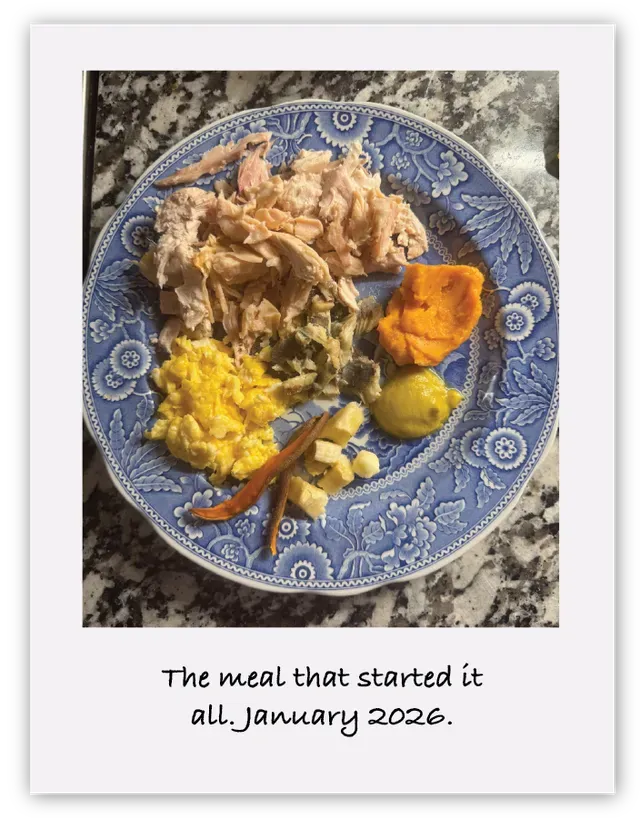

When we tried to switch her back to her prescription food afterward, she wanted nothing to do with it — and honestly, we couldn't blame her. She'd had real food. So I started learning everything I could about canine nutrition, developing recipes, researching ingredients, and working closely with the glucose data we'd been tracking for years.
Over time, we noticed changes. Stella became more energetic. Mealtime became something she looked forward to again. Most importantly, the happy spins came back. And something else, slower and quieter: she started regaining strength in her hind legs. For years she'd struggled on our hardwood floors, and we'd filled the house with rugs and added carpet to the stairs, assuming it was age and the Cushing's. Her vet has since confirmed what we were seeing. The only thing that changed was her food.
And as I dug deeper, something clicked. The more whole and recognizable her food was — real pieces rather than something ground into a paste — the better she seemed to do. What I was learning about how food is prepared, and how the body handles it, lined up with what I'd been watching at home for years. That's when I started questioning assumptions I'd never questioned before.
For years, we'd followed the recommendations we were given, and for good reason. But Stella made me wonder whether there was room for another approach — one built around recognizable ingredients, thoughtful preparation, and proper balance. None of this was ever a story about bad veterinarians; in fact, once Stella's care team saw what we were seeing, they supported us in exploring it. They'd been making the best calls they could with the information in front of them. I respect that. And good medicine starts with paying attention when a dog tells you something new.
But it made me wonder — if we were starting from scratch, what would we choose to put in our dog's bowl? That question became the foundation for Brave Kitchen.